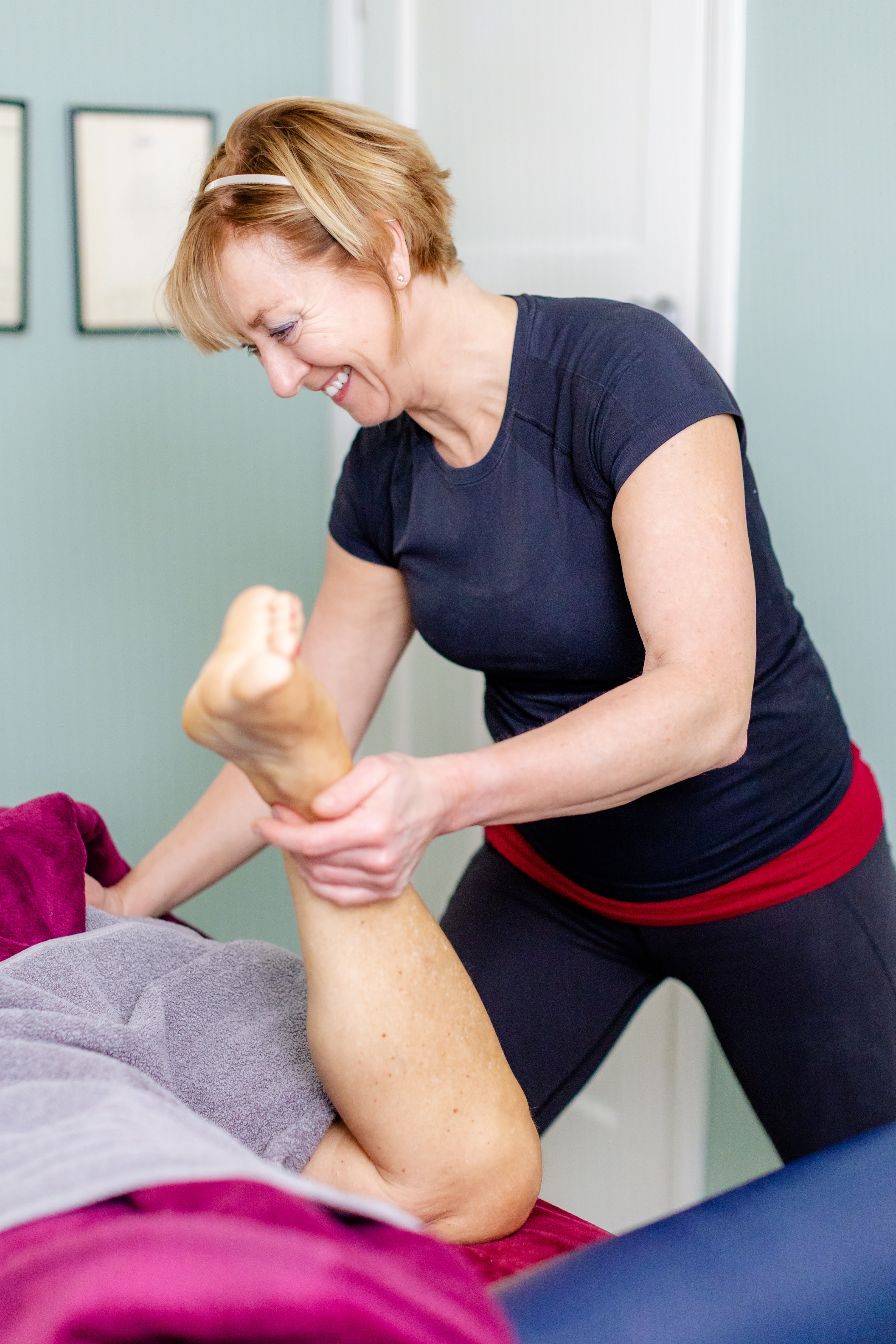
JEMS, or the Joanne Elphinston Movement System, is a clinical approach that looks beyond the immediate area of pain or injury.
As a JEMS Practitioner, I ask questions and investigate why the body may be choosing to move, compensate or protect itself in a particular way.
This can be particularly helpful when someone is managing the effects of trauma, injury, surgery, chronic pain or acute physical issues.
Looking at the reasons behind movement choices
Rather than focusing only on the symptom, the JEMS approach considers the wider picture. It explores why a structure may be under pressure, why certain movement patterns have developed, and how the body may be adapting to manage discomfort or restriction.
From there, we can devise, facilitate and support an individual programme that helps people make better movement choices, reduce pain and recover from injury or surgery effectively and efficiently.
An important part of the process is helping clients gain knowledge and understanding of the whys and hows behind the choices their bodies are making.
How JEMS is applied
Supporting movement in everyday life, recovery and performance
The JEMS approach can underpin work across a wide range of movement, rehabilitation and physical performance needs.
It can be used to explore how the body is functioning during everyday activities, exercise, work and sport, as well as when someone is recovering from injury, surgery or an ongoing physical condition.
- Posture and gait
- Exercise and movement-based classes
- Work-related physical issues
- Sports participation and performance
- Recovery from injury and surgery
- Chronic and acute physical conditions
The aim is not simply to return to activity, but to help people move with more confidence, greater understanding and a stronger foundation for the future.